

Roadside Architecture: The House of Wing Wah
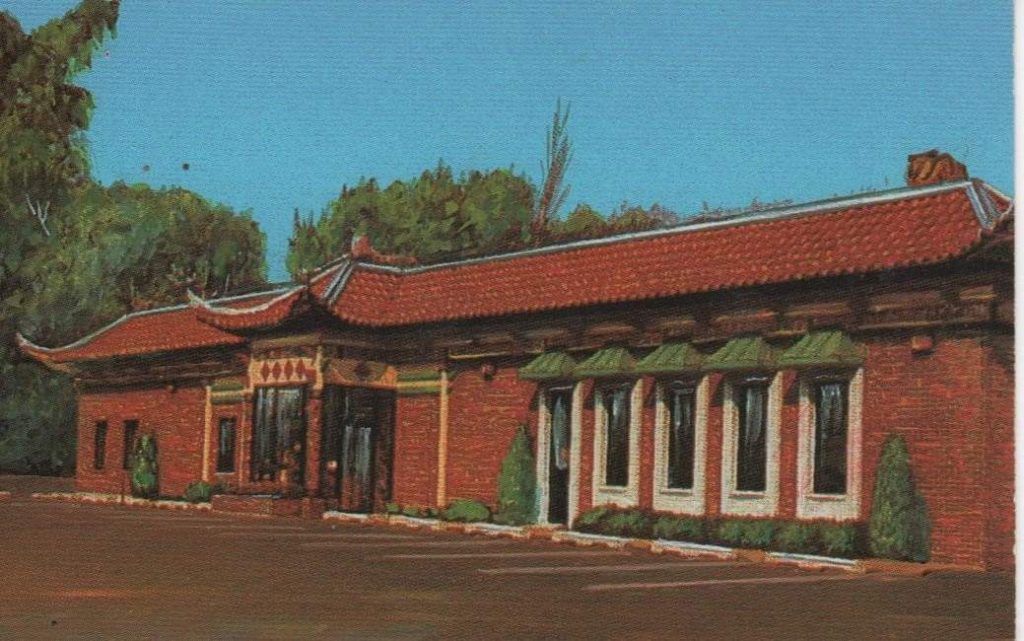
The House of Wing Wah was an excellent example of vernacular roadside architecture, buildings designed and constructed to serve travelers; specifically characterized by their unique, eye-catching and sometimes whimsical designs. These structures, frequently built for businesses like restaurants, gas stations and motels, are rooted in local traditions and materials, but adapted to the specific needs of roadside businesses.
Restaurants described as fitting the vernacular roadside architecture style are generally designed as over-the-top-expressions befitting the type of food served within. The Wing Wah, a restaurant in Delaware serving modern and traditional Chinese dishes, was a defining example of such roadside architecture.
When Wing Quong Lee and his wife, Wah Shui opened their first restaurant they combined their first names; thereby establishing the House of Wing Wah. Their first restaurant location was on West 7th Street in Wilmington (1963), the second was in Newark (1972), and the third in Talleyville (1975). Of the three restaurants it is the Talleyville Wing Wah, located off Concord Pike, which served as a perfect example of roadside architecture.
The building’s exterior was a creative architectural undertaking blending traditional Chinese architectural features with modern design. The Wing Wah’s traditional Chinese architectural elements included a red tile roof with curved eaves, and upturned roof corners that were adorned with dragons at the ridge line. The building’s modern elements included a centrally placed glass vestibule with side door entries and elongated fixed windows highlighted by wide surrounds topped with green overhanging hooded eaves.
The fanciful design of the Wing Wah was unfortunately lost, however, following Mr. and Mrs. Lee’s retirement in 2004 when the business was sold and the building was demolished soon after. The Wing Wah’s history is featured as part of Details in Delaware social media campaign to highlight unique architectural features and cultural resources in the state.